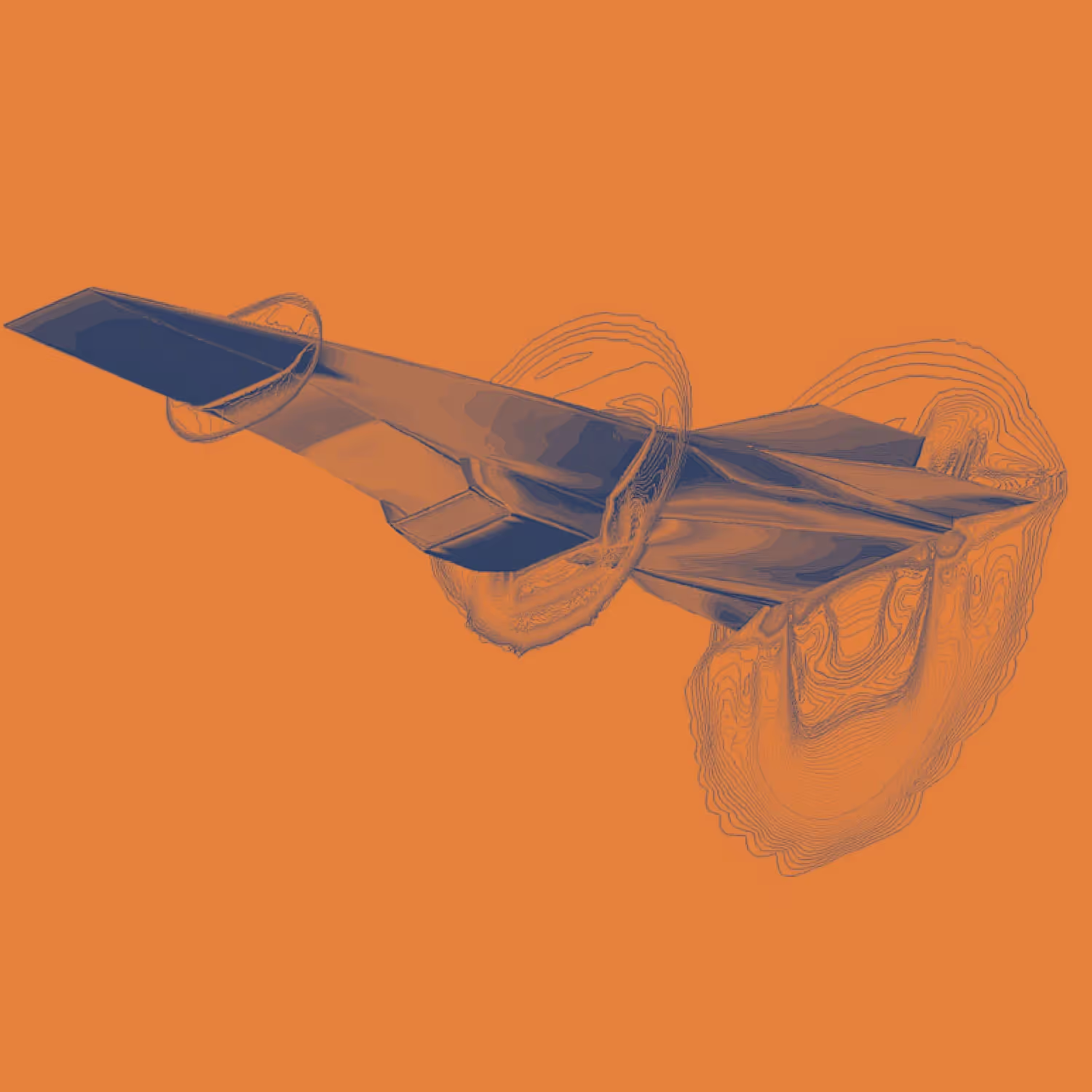
Gain flight heritage with frequent reentry
Varda’s hypersonic flight test bed is the off-the-shelf method to reproduce the most challenging hypersonic and reentry flight environments without building a costly dedicated representative test vehicle. You gain flight heritage through Mach 25 and advance your TRL.
Affordable, frequent, and recoverable high-hypersonic flight testing
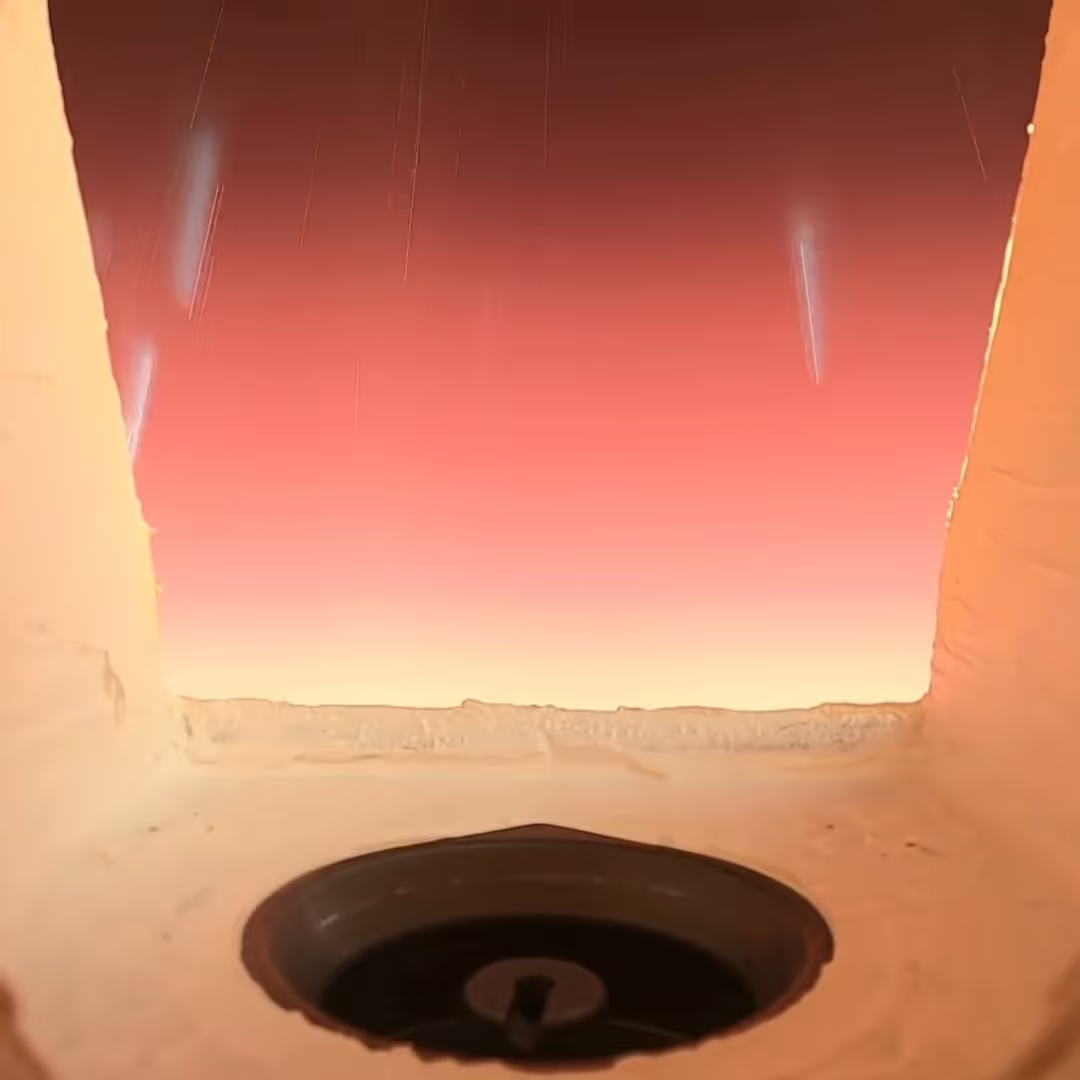
Varda’s orbital capsule enters the atmosphere at 18,000 miles per hour. The capsule hits Mach 25+ on every mission before landing by parachute on Earth. This offers a real flight environment for hypersonic reentry vehicle subsystems such as thermal protective materials, navigation, communication, and sensors. Test as you fly, fly as you test.
Mach 25+ Flight
It is impossible to replicate the coupled aero-thermal-chemistry conditions at high-hypersonic flights on the ground.
High Heat Flux
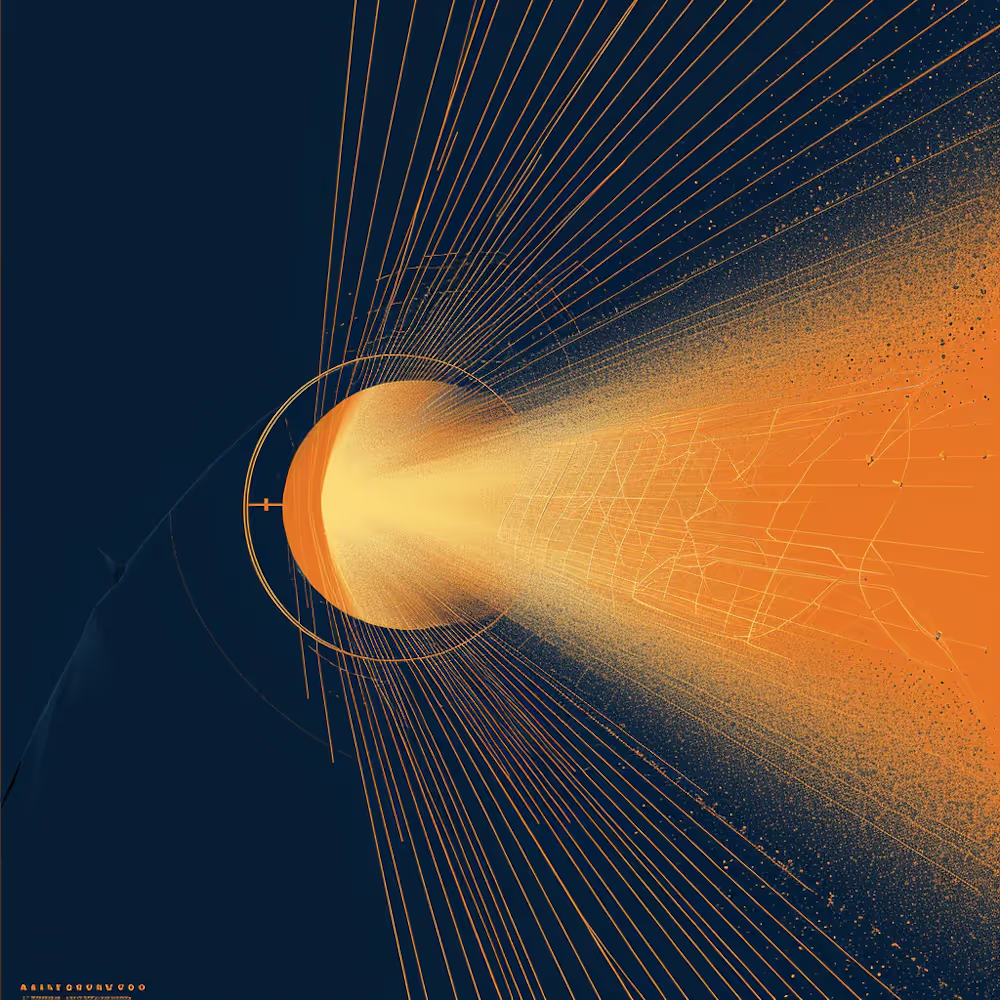
Varda’s capsule experiences sustained plasma conditions in flight: 300W/cm² heat flux. 18,000K+ in the flow field.
Affordable
Our commercial customers require low cost reentry, leading to cost benefits for government missions.
Recoverable
High-fidelity data and simplified post-flight analysis on payload.
Frequent
By 2026, Varda expects a monthly reentry cadence between government and commercial demand.
Reliable
Our commercial business relies on successful recovery of the capsule, every mission, every time.
Configurable Payload
Varda’s payload capacity allows over 100W of power, tens of kilograms of internal mass, and plenty of area for TPS.
Increase TRL
Gain flight heritage where it matters most. Build confidence in transitioning capability.
Frequent reentry, from orbit to Earth
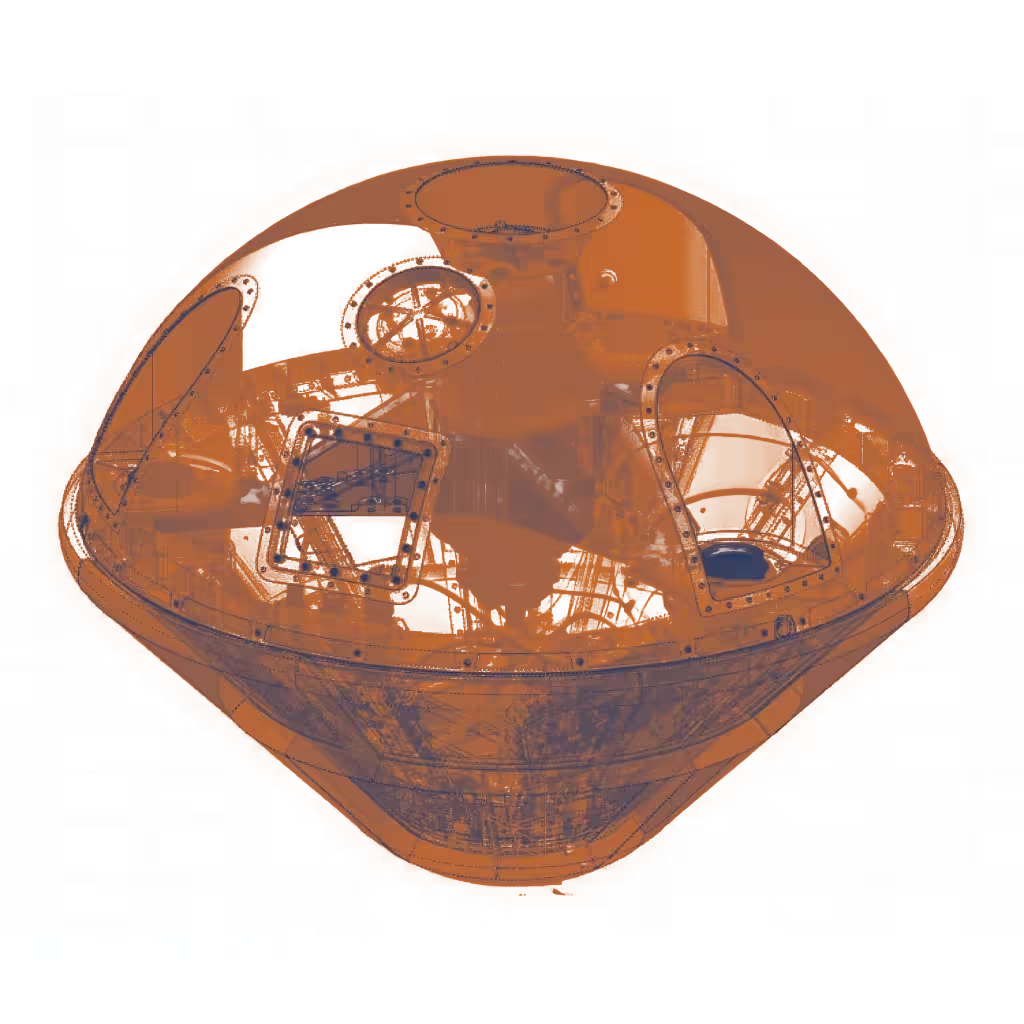
Varda’s capsule is designed for rapid iteration and high production rates. We dream of reentry becoming as commonplace as launch and space just another location to manufacture. Modular in design and ready-built for materials rather than humans—our capsule completes the space logistics chain.
The missing link in agile aerospace
The hypersonic test regime currently lacks real-world testing environments and the rapid cadence required to derisk our most advanced aerospace vehicles. Ground testing overly simplifies the coupled flight environment at high Mach speeds, and representative test vehicles are infrequent and expensive. Varda’s capsule offers true-to-flight conditions offering a path to quickly gain flight heritage when it matters most.
Computational design
Quick but potential inaccuracies
Ground testing (wind tunnel or other)
Short duration and false atmospherics
Varda flight test
Affordable, frequent, true environments
Representative flight test
Accurate but very expensive and infrequent
Real world conditions that maximize your learning
With a modular design, flexibility to launch on rideshare or dedicated flights, your mission profile is configurable to your exact requirements.
Commercial launch
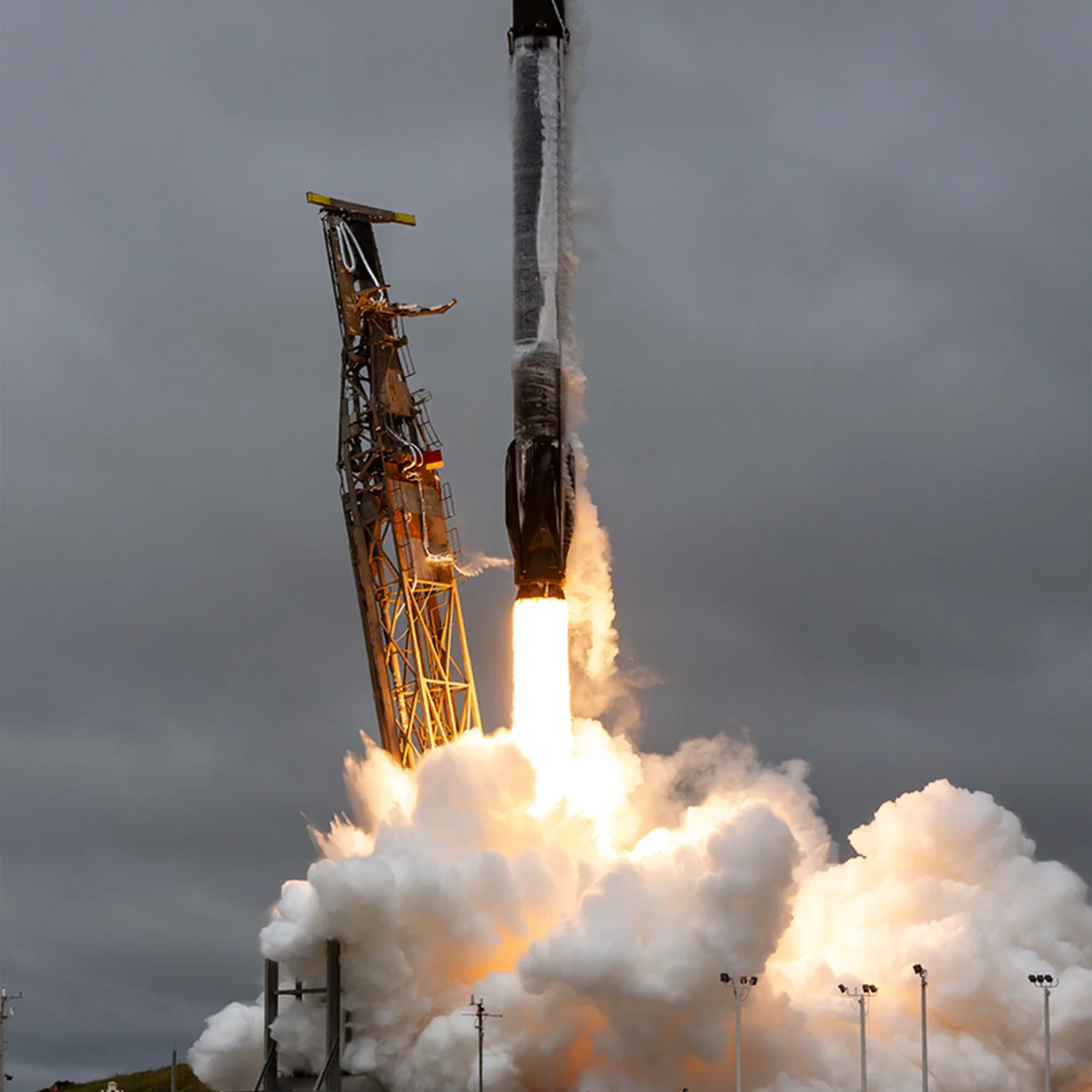
Varda’s capsules are launched into orbit aboard commercial launch vehicles with dedicated options available.
Orbital operations and repositioning
Varda is able to gather relevant payload data while in orbit, before repositioning for terrestrial reentry.
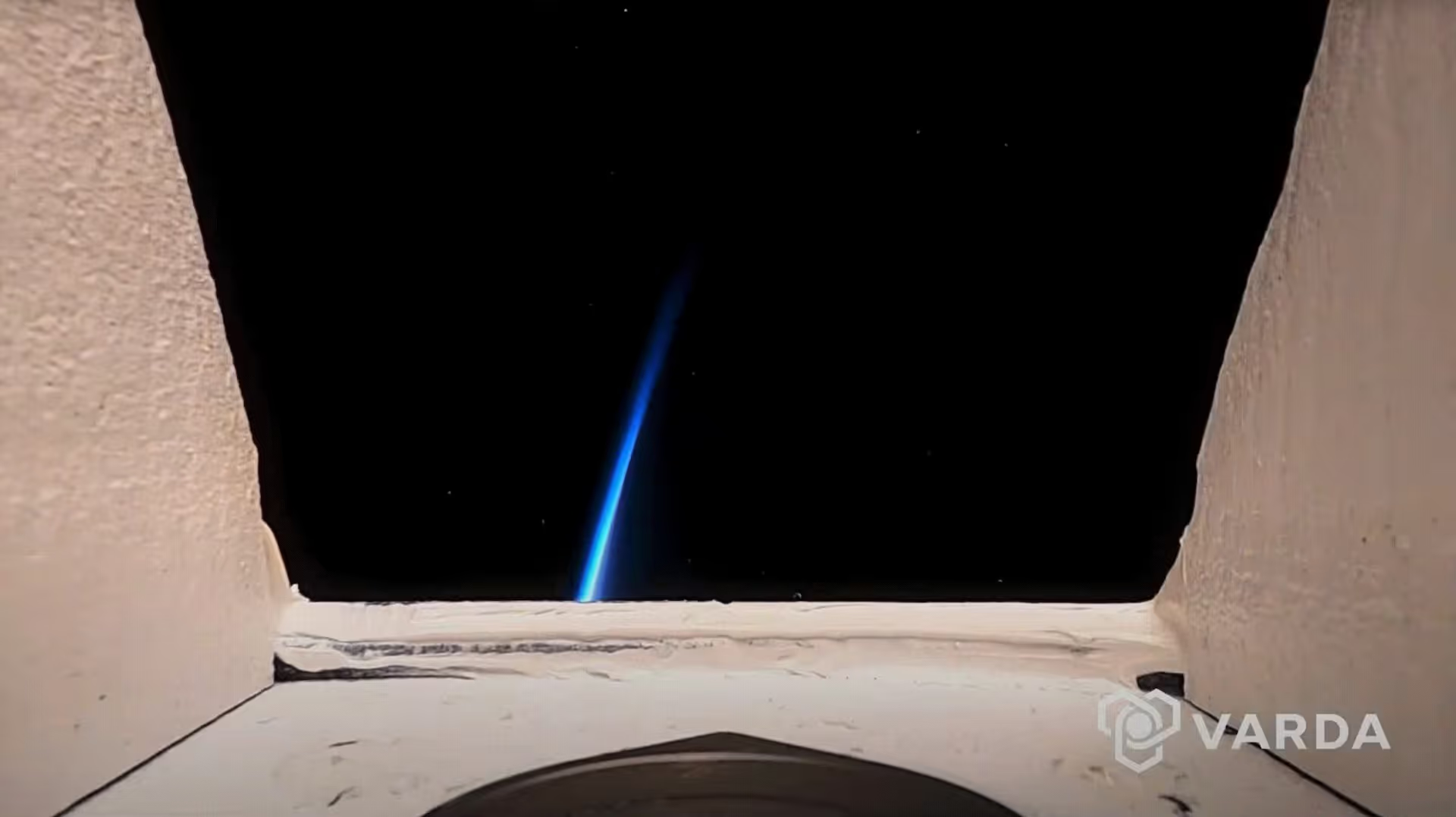
Ballistic reentry
Once in position, Varda's capsule performs its reentry burn setting the capsule on a ballistic trajectory, starting at Mach 25, before releasing its parachutes once at terminal velocity. It's this phase in flight where the majority of information for the reentry and hypersonic community will be gathered.
Recovery
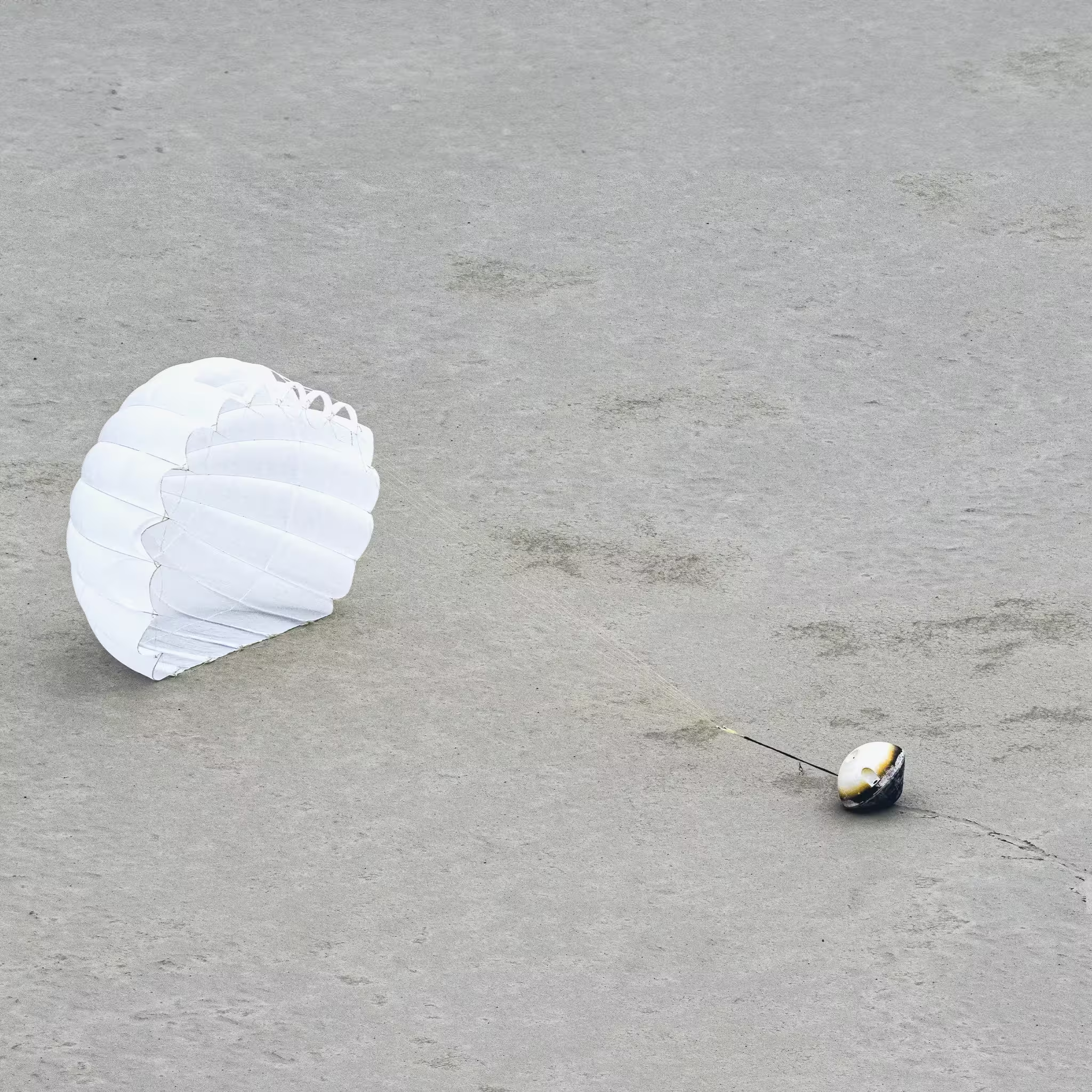
Varda’s capsule, and all relevant sensors and materials land terrestrially meaning data units, and materials that experienced reentry can be easily recovered and analyzed.
Explore the science
Return of OSPREE: In Situ Spectroscopic Measurements During Atmospheric Reentry
Developing the OSPREE Payload for Spectroscopic Measurements of a Mach 25+ Plasma Sheath

Optimizing Optical Emission Measurements on the Varda Hypersonic Testbed Vehicle

Aerothermodynamic Reentry Flight Experiments - EXPERT
Critical Hypersonic Aerothermodynamic Phenomena